Solar energy is radiant light and heat from the Sun that is harnessed using a range of ever-evolving technologies such as solar heating,
photovoltaics, solar thermal energy, solar architecture, and more.
It is a very important source of renewable energy and its technologies are broadly characterized as either passive solar or active solar depending
on how they capture and distribute solar energy or convert it into solar power.
Solar panels are devices that convert light into electricity.Solar panels are a collection
of solar cells. Multiple solar cells spread over a large area work together to make enough power.
The more light hits the solar cell the more power is produced which is why it is the go-to way to provide spacecraft with electricity.
Photovoltaics is the conversion of light into electricity by using semiconducting materials that exibit
the photovoltaic effect.
There are different types of photovoltaics.
Thin-film photovoltaics
A thin-film solar cell is made by depositing one or more thin layers of PV material
on a supporting material such as glass, plastic, or metal.
Organic photovoltaics
Organic photovoltaics are made out of carbon-rich polymers customized to enhance
a specific function of the cell-like sensitivity to a certain type of light.
OPV are less efficient and have shorter lifetimes but they are cheaper to
manufacture in high quantities.
Concentration Photovoltaics
Concentration PV, also known as CPV, focuses sunlight onto a solar cell by using a mirror or lens.
PV materials become more efficient at converting energy as the light becomes more concentrated so
the photovoltaics with the highest efficency are the CPV.
Solar panels generate electricity from an effect that is called the photovoltaic
effect which is a process that generates an electric current in a photovoltaic cell when it is exposed to sunlight. These solar cells are composed of two different types of semiconductors a p-type and an n-type—that are joined together to create a p-n junction.
By joining these two types of semiconductors, an electric field is formed in the region
of the junction as electrons move to the positive p-side and holes move to the negative n-side.
This field causes negatively charged particles to move in one direction and positively charged
particles in the other direction.
Light is composed of photons, which are simply small bundles of electromagnetic radiation or energy. When light of a suitable wavelength is incident on these cells,
energy from the photon is transferred to an electron of the semiconducting material,
causing it to jump to a higher energy state known as the conduction band.
In their excited state in the conduction band, these electrons are free to move through the material,
and it is this motion of the electron that creates an electric current in the cell.
→ The first solar panel cell was invented in 1941.
→ One hour of sunlight is equal to one year's worth of energy on the entire Earth.
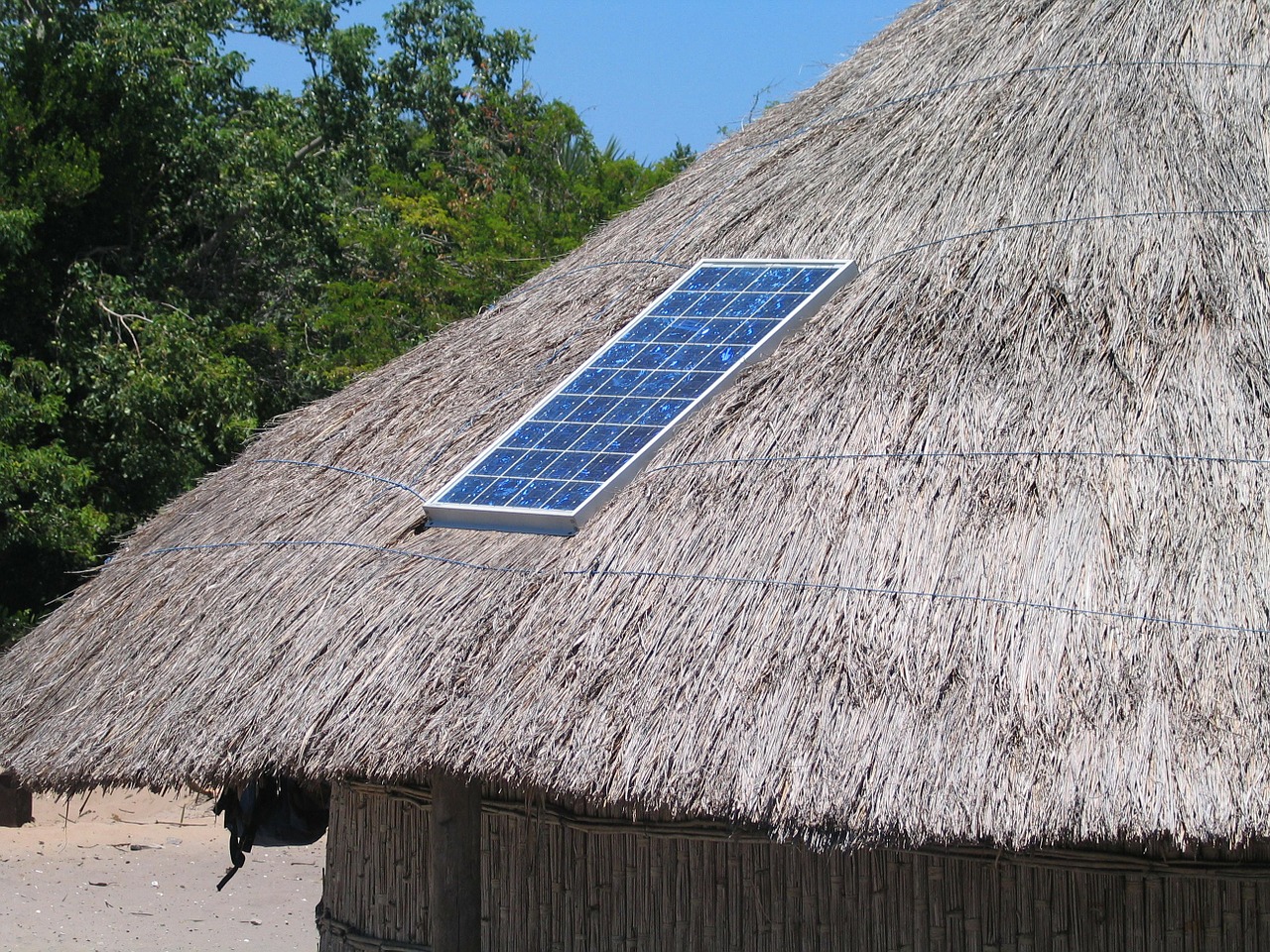 Solar panels are devices that convert light into electricity.Solar panels are a collection
of solar cells. Multiple solar cells spread over a large area work together to make enough power.
The more light hits the solar cell the more power is produced which is why it is the go-to way to provide spacecraft with electricity.
Solar panels are devices that convert light into electricity.Solar panels are a collection
of solar cells. Multiple solar cells spread over a large area work together to make enough power.
The more light hits the solar cell the more power is produced which is why it is the go-to way to provide spacecraft with electricity. 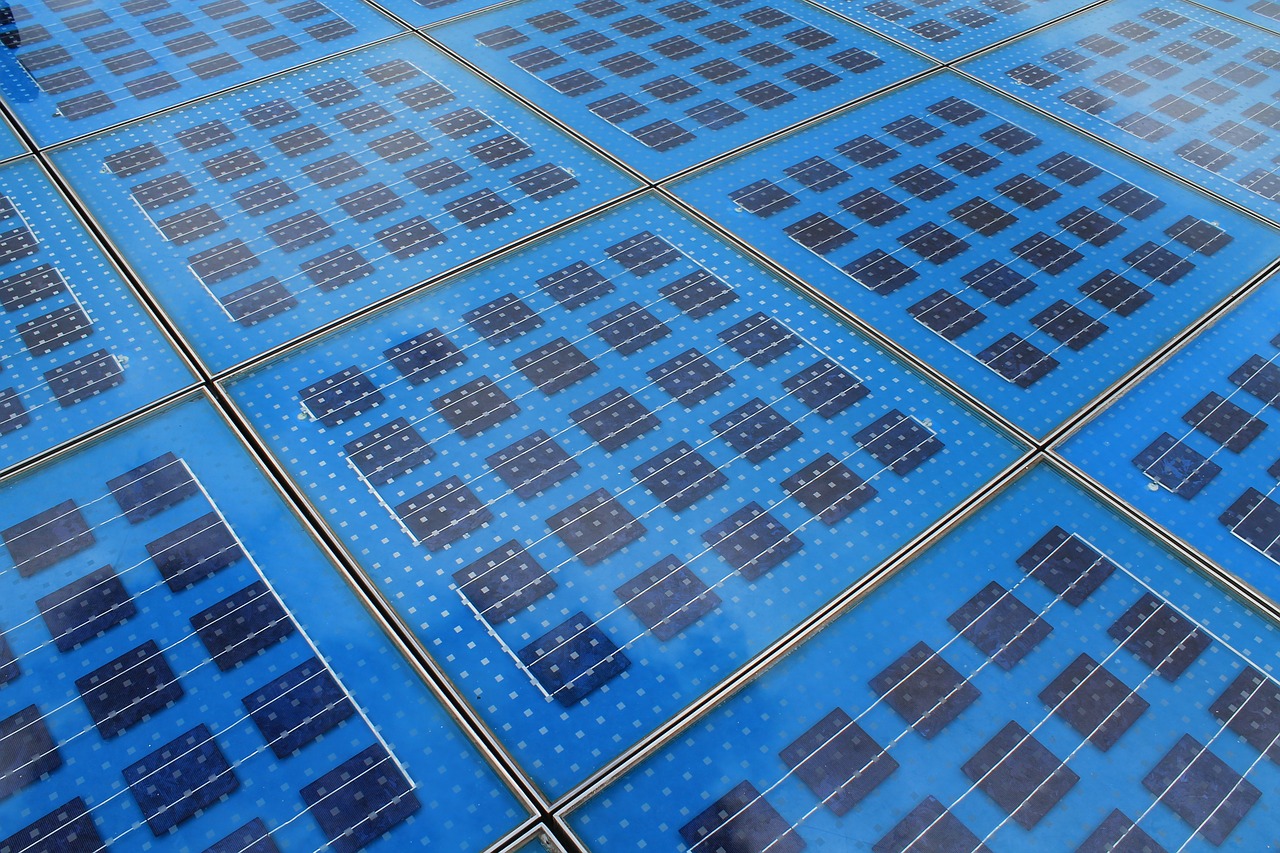
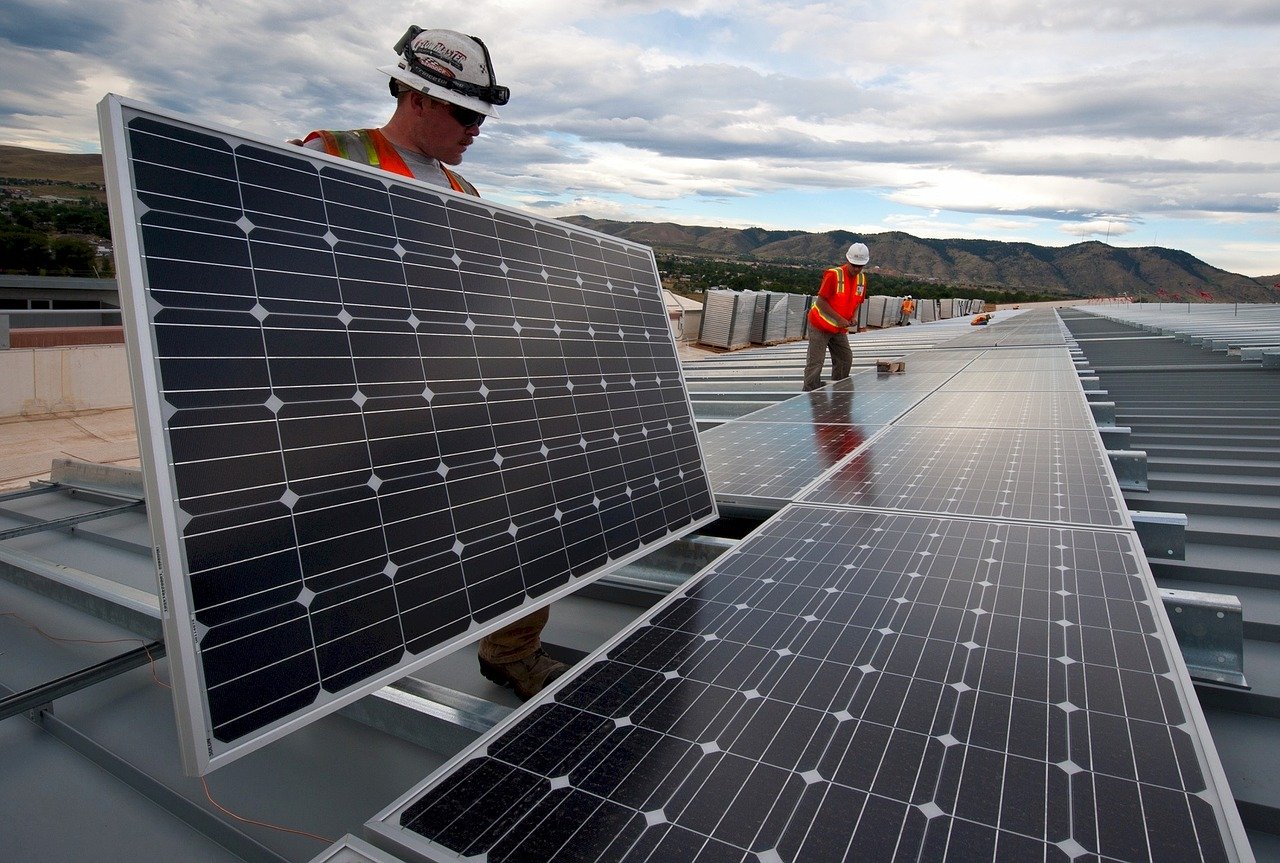 Solar panels generate electricity from an effect that is called the photovoltaic
effect which is a process that generates an electric current in a photovoltaic cell when it is exposed to sunlight. These solar cells are composed of two different types of semiconductors a p-type and an n-type—that are joined together to create a p-n junction.
By joining these two types of semiconductors, an electric field is formed in the region
of the junction as electrons move to the positive p-side and holes move to the negative n-side.
This field causes negatively charged particles to move in one direction and positively charged
particles in the other direction.
Light is composed of photons, which are simply small bundles of electromagnetic radiation or energy. When light of a suitable wavelength is incident on these cells,
energy from the photon is transferred to an electron of the semiconducting material,
causing it to jump to a higher energy state known as the conduction band.
In their excited state in the conduction band, these electrons are free to move through the material,
and it is this motion of the electron that creates an electric current in the cell.
Solar panels generate electricity from an effect that is called the photovoltaic
effect which is a process that generates an electric current in a photovoltaic cell when it is exposed to sunlight. These solar cells are composed of two different types of semiconductors a p-type and an n-type—that are joined together to create a p-n junction.
By joining these two types of semiconductors, an electric field is formed in the region
of the junction as electrons move to the positive p-side and holes move to the negative n-side.
This field causes negatively charged particles to move in one direction and positively charged
particles in the other direction.
Light is composed of photons, which are simply small bundles of electromagnetic radiation or energy. When light of a suitable wavelength is incident on these cells,
energy from the photon is transferred to an electron of the semiconducting material,
causing it to jump to a higher energy state known as the conduction band.
In their excited state in the conduction band, these electrons are free to move through the material,
and it is this motion of the electron that creates an electric current in the cell.