Wind is the movement of air from an area of high pressure to an with low pressure. Wind exists because the sun unevenly heats the surface of the Earth. As hot air rises, cooler air moves in to fill the space. As long as the sun keeps shining, the wind will keep blowing.
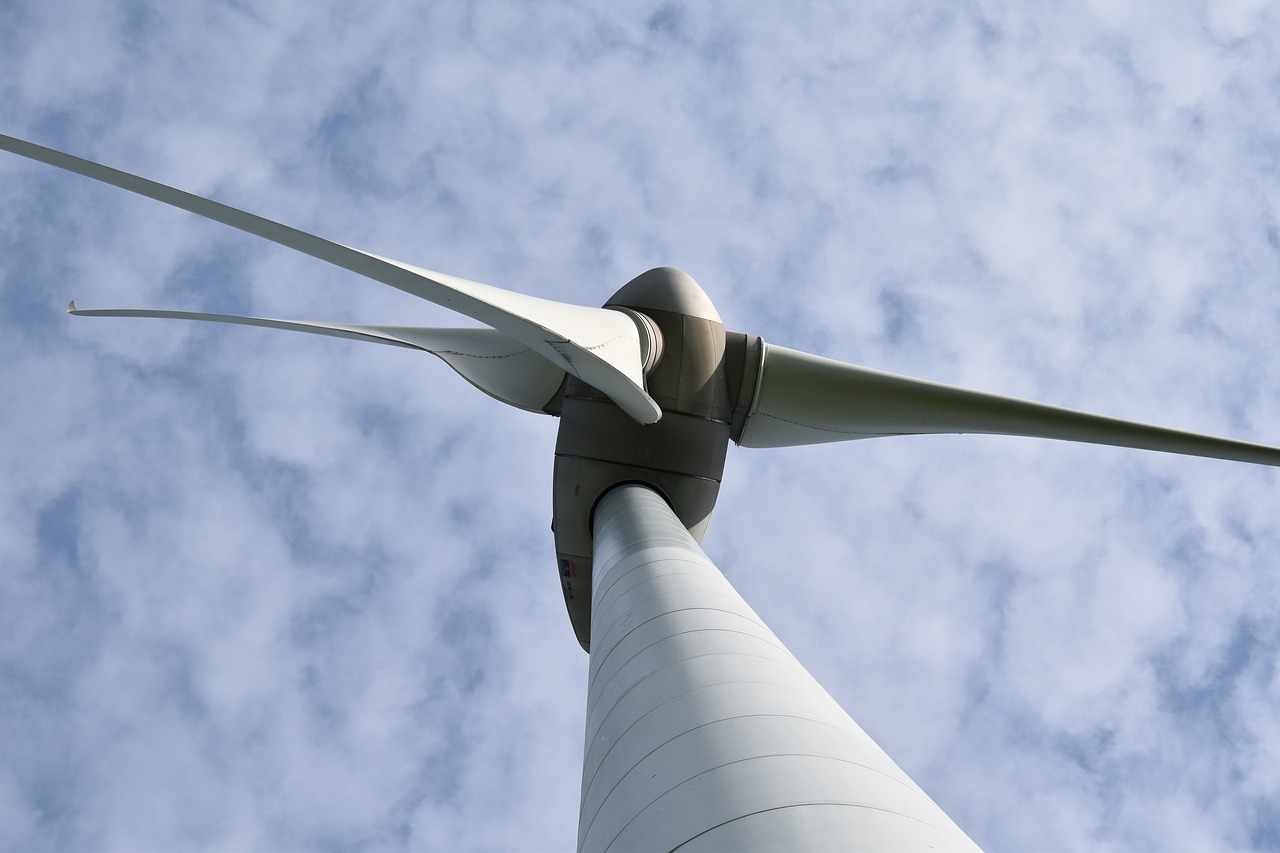 Wind energy is a renewable source of energy. It does not contaminate and it reduces the use of fossil fuels.
Also, wind energy is a "native" energy which means it exists everywhere on the planet which contributes in
to reducing energy imports. An important factor is that wind energy does not generate waste or contaminate water
which is crucial considering the scarcity of water.
Wind energy is a renewable source of energy. It does not contaminate and it reduces the use of fossil fuels.
Also, wind energy is a "native" energy which means it exists everywhere on the planet which contributes in
to reducing energy imports. An important factor is that wind energy does not generate waste or contaminate water
which is crucial considering the scarcity of water.
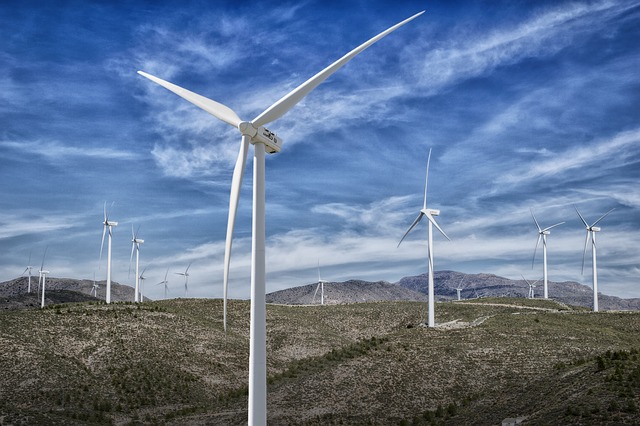 Wind turbines are complex structures that convert kinetic energy into electrical energy.
Wind turbines operate because the wind turns the two or three propeller-like blades around a rotor.
The rotor is connected to the main shaft, which spins a generator to create electricity.
Wind turbines are complex structures that convert kinetic energy into electrical energy.
Wind turbines operate because the wind turns the two or three propeller-like blades around a rotor.
The rotor is connected to the main shaft, which spins a generator to create electricity.
There are two main types of wind turbines.
Horizontal-axis turbines
Horizontal-axis turbines have blades like airplane propellers. There are usually three blades on each turbine. The largest horizontal-axis turbines are as tall as a 20-story building and have blades as long as 100 feet (30 meters). Most of the wind turbines in use are horizontal-axis turbines.
Vertical-axis turbines
The vertical-axis turbines have blades attached to the top and to the bottom of a vertical rotor. The advantage of this type of turbine is that it captures the wind from any direction without needing to reposition. These kind of turbines are not used as frequently as the horizontal-axis ones because they don't perform as well.
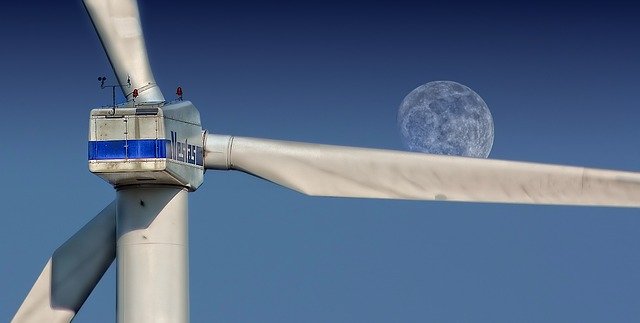 Wind power converts into electricity by magnets moving past stationary coils of wire which
is known as the stator. The generator uses turning motion to rotate a rotor which has
oppositely charged magnets and is surrounded by copper wire loops. By spinning
the rotor around the inside of the core electromagnetic induction is created
when AC electricity production occurs which is then converted into DC electricity.
This can charge batteries which store the electrical energy
or can feed into a grid-interactive inverter for feeding power into the electricity grid.
Wind power converts into electricity by magnets moving past stationary coils of wire which
is known as the stator. The generator uses turning motion to rotate a rotor which has
oppositely charged magnets and is surrounded by copper wire loops. By spinning
the rotor around the inside of the core electromagnetic induction is created
when AC electricity production occurs which is then converted into DC electricity.
This can charge batteries which store the electrical energy
or can feed into a grid-interactive inverter for feeding power into the electricity grid.
→ Wind mills date all the way back to the year 2000 BC where they were used in China.
→ One wind turbine could power up to 500 homes.
→ Albert Betz is a German physicist who discovered the theory of wind energy in 1919.
→ Wind turbines create electricity while wind mills produce mechanical energy.
→ Wind turbines can be as tall as 200 meters and have blades that can move at a speed of up to 200 mph.
→ The production of wind energy produces more jobs than any other form of energy production.